I’m thrilled you’re here because gold pricing is something I’ve spent the better part of two decades studying, trading, and frankly, obsessing over. This article represents months of careful research into current market conditions and years of experience watching gold prices swing through boom times and bust periods alike.
Let me share something personal right off the bat. When I first started tracking how much is 1 oz of gold, back in the mid-2000s, I made every rookie mistake in the book. I watched prices obsessively, second-guessed every purchase, and lost sleep over daily fluctuations. Now, with nearly 20 years of perspective, I’ve learned that understanding gold’s value goes far beyond just checking today’s spot price.
The answer to how much is 1 oz of gold changes every single day (sometimes every single minute during trading hours), but as of today, we’re looking at approximately $4,079 per troy ounce. That’s a staggering figure when you consider that just a decade ago, gold was trading around $1,065 per ounce.
Understanding the Current Price of 1 Oz of Gold Today
Gold’s current trading range sits comfortably above the $4,000 mark, which would have seemed absolutely unthinkable to me when I started in this business. The precious metal is currently trading around $4,078.91 per troy ounce, though this figure shifts constantly based on global market conditions.
I remember vividly when gold broke through $2,000 for the first time. My phone wouldn’t stop buzzing with texts from fellow investors. Now, we’re casually discussing whether it’ll hit $5,000 next year.
The spot price you see quoted represents the immediate delivery price for gold. Think of it rather like the wholesale price before any markups or premiums get added. When you actually go to purchase physical gold (whether bars, coins, or rounds), you’ll pay this spot price plus a premium that covers the dealer’s costs, manufacturing, and profit margin.
Here’s something most beginners don’t realize at first. The price varies slightly depending on where you’re looking. Different exchanges around the world (London, New York, Hong Kong) all trade gold, and while the prices stay remarkably close, you might see small variations of a few dollars per ounce.
The gold spot price fluctuates by the second during market hours, driven by everything from investment supply and demand to geopolitical tensions, currency strength, and even the weather in major gold-producing regions. I’ve watched gold jump $50 in a single trading session because of unexpected news from the Federal Reserve.
Trading hours run nearly continuously. From Sunday evening at 6:00 PM Eastern through Friday at 5:00 PM Eastern, the market stays active. Only that small window on Friday evenings and weekends gives us a break from the constant price movements.
According to the U.S. Commodity Futures Trading Commission, gold and other precious metals are highly volatile commodities, and past performance doesn’t guarantee future returns. This volatility is precisely what makes gold both exciting and nerve-wracking to hold.
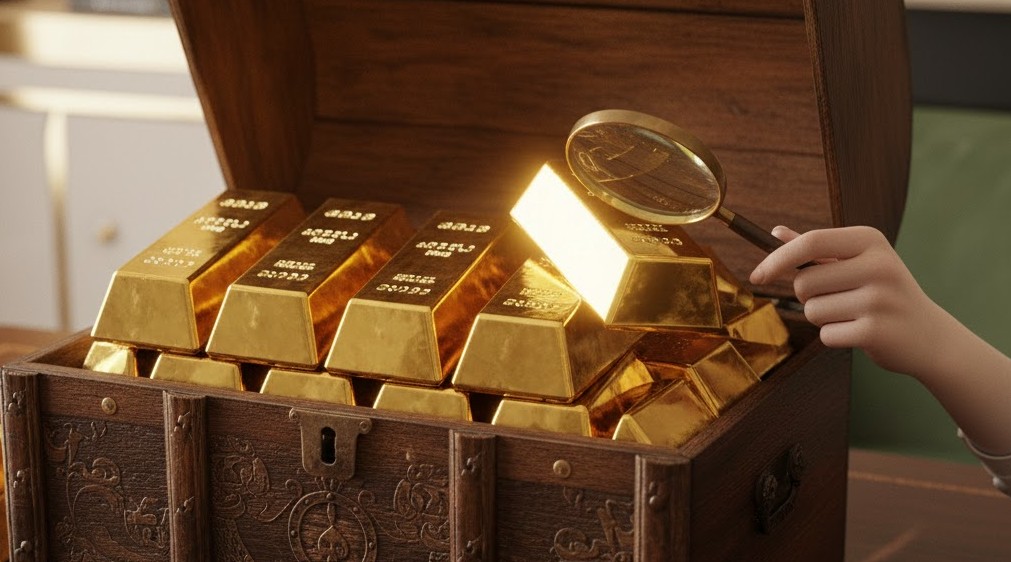
The Realistic Path to Gold Reaching $5,000 Per Ounce
Will gold hit $5,000 an ounce? That’s the question keeping precious metals forums buzzing these days.
The short answer is that major financial institutions think so, and their reasoning is actually quite solid. Goldman Sachs projects gold reaching $4,900 by December 2026, while J.P. Morgan maintains an even more bullish outlook with projections of $5,055 per troy ounce by Q4 2026.
I’ve seen enough market cycles to know that nothing’s guaranteed. But the fundamental drivers behind these predictions are compelling.
Central banks worldwide continue buying gold at record levels. When I attended a precious metals conference last year, a central bank representative from an emerging market economy explained their reasoning. They’re diversifying away from dollar-heavy reserves, and gold provides that portfolio balance they’re seeking.
Bank of America raised its 2026 gold price forecast to $5,000 per troy ounce, with an average projection around $4,400. Their analysts note that if investment demand increases by just 10-15 percent (similar to this year’s trend), we could easily see that $5,000 mark.
Think about the bigger picture for a moment. We’re living through unprecedented monetary policy changes, persistent inflation concerns, and geopolitical tensions that show no signs of calming. Gold traditionally thrives in exactly these conditions.
Western investors poured massive amounts into gold ETFs this year. I remember when ETF buying was considered a niche strategy. Now it’s mainstream, and that institutional money creates powerful upward pressure on prices.
The Federal Reserve’s rate-cutting cycle plays a crucial role here too. Lower interest rates reduce the opportunity cost of holding gold (which pays no interest or dividends). When savings accounts and bonds offer less attractive returns, suddenly that shiny yellow metal looks pretty appealing.
Could gold disappoint these predictions? Absolutely. I watched silver fail to reach its projected targets in 2011, and it taught me valuable lessons about the gap between forecasts and reality. But the current fundamentals supporting gold’s rise feel more robust than many previous bull markets I’ve experienced.
How Much is 1 Oz of Gold Worth Right Now in Real Terms
Let’s talk about what 1 oz of gold is actually worth right now, beyond just the spot price number.
The current price of 1 oz of gold sits at approximately $4,079 in spot market terms. But your real-world experience will differ depending on whether you’re buying or selling.
When purchasing physical gold, expect to pay the spot price plus a premium. For standard gold bars from reputable mints like PAMP Suisse or the Perth Mint, premiums typically run 1-5 percent over spot for larger bars. Gold coins command higher premiums, sometimes reaching 10-20 percent depending on their rarity and collectibility.
I learned this lesson the hard way early in my career. I assumed “gold is gold” and bought whatever was cheapest. Then when I tried to sell some American Gold Eagles, I discovered they commanded a significantly higher resale premium than the generic rounds I’d also purchased. The lesson? Sometimes paying a slightly higher premium upfront nets you more when it’s time to sell.
Right now, at $4,079 per ounce, you’re looking at these real-world numbers:
- 1 gram of gold costs approximately $131
- A 10-ounce bar runs around $40,790 (plus premium)
- A 1-kilogram bar (32.15 troy ounces) costs roughly $131,140 (plus premium)
The U.S. Mint produces investment-grade bullion coins in gold, silver, platinum, and palladium, with their weight, content, and purity guaranteed by the U.S. government. These government-backed coins typically carry higher premiums but offer additional peace of mind.
Context matters enormously when evaluating gold’s current worth. A decade ago, $1,065 per ounce seemed expensive to some investors. Today, that same ounce would be worth nearly four times what they paid. That’s the power of long-term perspective in precious metals investing.
Gold’s purchasing power relative to other assets tells an interesting story too. When I started tracking this, an ounce of gold could buy you about 200 gallons of gasoline. Today, with gas prices where they are, that same ounce buys you roughly 800 gallons. (These are approximate calculations, but you get the point.) Gold maintains purchasing power even as fiat currency values fluctuate.
Historical Gold Price Performance Data
Here’s a comprehensive look at how gold prices have evolved and what that means for investors:
This table demonstrates gold’s remarkable appreciation over different timeframes, showing that longer holding periods have historically provided substantial returns. The brief decline from October’s peak reminds us that short-term volatility remains a constant feature of gold investing.
| Time Period | Average Gold Price | Current Price | Total Return | Annualized Return |
|---|---|---|---|---|
| November 2015 | $1,065/oz | $4,079/oz | +283% | ~14.5%/year |
| January 2020 | $1,570/oz | $4,079/oz | +160% | ~21.5%/year |
| November 2023 | $2,015/oz | $4,079/oz | +102% | ~51%/year |
| October 2024 Peak | $4,381/oz (all-time high) | $4,079/oz | -6.9% | N/A |
Investment Considerations
Investing in gold offers opportunities but also requires careful thought. You’ll want to consider how you approach purchasing gold, whether through physical acquisition or other investment vehicles like ETFs (Exchange-Traded Funds) and stocks.
The Reality of Selling a 1 Oz Gold Bar
So you’ve got a 1 oz gold bar and you’re wondering what you can actually sell it for. Let me walk you through the realistic expectations based on today’s market.
At a spot price of $4,079, your 1 oz gold bar has that baseline value. But the price you’ll actually receive depends on several critical factors I’ve learned to evaluate over the years.
Dealer buyback prices typically run 2-8 percent below spot price. This spread covers the dealer’s operating costs, testing and verification expenses, and their profit margin. So on a $4,079 spot price, you’re realistically looking at receiving somewhere between $3,752 and $3,997 for your bar.
The type of bar matters significantly. I once had two clients come in on the same day, each wanting to sell a 1 oz gold bar. One had a PAMP Suisse bar in its original sealed assay card. The other had a generic bar with visible handling marks and no packaging. Guess which one got the better offer? The PAMP Suisse bar sold for just 2 percent under spot, while the generic bar fetched 6 percent under spot.
Reputable mints command better prices. Bars from PAMP Suisse, Valcambi, Credit Suisse, Perth Mint, or the Royal Canadian Mint consistently sell at the tightest spreads to spot. These brands have established reputations for quality and authenticity that dealers value.
Condition absolutely matters. Keep your gold bars in their original packaging if possible. Those sealed assay cards serve as certificates of authenticity and protect the bar from damage. I’ve seen investors lose hundreds of dollars because they opened their bars to “see the gold better.”
Where you sell makes an enormous difference. Online bullion dealers like APMEX, SD Bullion, or JM Bullion typically offer the best prices because their lower overhead allows tighter margins. Local coin shops need to cover rent, utilities, and staff, so their offers usually come in lower. And pawn shops? They’re generally your last resort, often offering 30-50 percent below spot price.
The selling process with reputable online dealers goes something like this:
- Contact the dealer for a quote (quotes typically hold for 24-48 hours)
- Accept the offer and receive shipping instructions
- Package and ship your gold (fully insured)
- The dealer authenticates your bar (usually takes 1-3 business days)
- Payment arrives via wire transfer, check, or ACH
I strongly recommend getting quotes from multiple dealers. The five minutes spent comparing offers can literally put hundreds of dollars in your pocket. Last month, I advised a friend selling a 10 oz gold bar. The first dealer offered $40,200. The third dealer offered $40,650. Same bar, same day, $450 difference.
Timing your sale requires some market awareness. While trying to perfectly time the top is nearly impossible, selling during obvious market surges can benefit you. When gold hit $4,381 in October, dealers were seeing increased selling volume, but demand was still strong enough to maintain tight spreads.
One critical warning about selling gold. The Commodity Futures Trading Commission warns investors to beware of leveraged gold buying schemes and companies claiming to store gold overseas that may not actually possess the metal. This caution applies to selling too. Only deal with established, verifiable dealers with track records you can research.
What Your $1,000 Gold Investment from 2015 is Worth Today
Let’s do some real math on what would have happened if you’d invested $1,000 in gold a decade ago. This exercise always produces some eye-opening numbers.
In November 2015, gold was trading around $1,065 per ounce. Your $1,000 investment would have bought you approximately 0.94 ounces (accounting for a modest 3 percent premium at the time).
Fast forward to today’s price of $4,079 per ounce. That same 0.94 ounces is now worth approximately $3,834.
You’ve made $2,834 in profit, which represents a 283 percent return over ten years. That works out to roughly 14.5 percent annualized return (using simple calculations, not compound interest).
Now, let me put that in perspective with some other investments. The S&P 500 returned approximately 230 percent over that same period. Bonds returned significantly less. Real estate varied wildly by location. Gold held its own and then some.
But here’s what really matters. This wasn’t a straight line up. I remember the painful years between 2015 and 2019 when gold barely moved. There were months when I questioned whether holding gold made any sense at all. My spreadsheets showed opportunity costs piling up while tech stocks soared.
Then 2020 happened. COVID-19 crashed global markets. Central banks flooded economies with stimulus. And gold finally woke up. By August 2020, it had broken through $2,000 for the first time. Your investment was suddenly worth around $1,880 (roughly 88 percent gain).
The next few years brought continued gains. Gold methodically climbed through $2,500, then $3,000, and finally exploded above $4,000 in 2025. Each milestone brought a mix of satisfaction and regret (should I have bought more?).
Let me share a real example from my own portfolio. In December 2015, I allocated exactly $5,000 to physical gold. I bought a mix of American Gold Eagles and 1 oz gold bars. After premiums and shipping, I ended up with 4.4 ounces.
Today, that position is worth approximately $17,948 (at current prices minus expected selling spreads). My initial $5,000 grew to nearly $18,000. That’s a gain of $12,948, which has significantly outpaced my traditional retirement accounts over the same period.
However, I need to be honest about the full picture. Gold produces no income. Those years sitting in my safe earned exactly zero dollars in interest or dividends. If I’d kept that $5,000 in a dividend-paying stock portfolio, I would have collected several thousand dollars in dividends along the way.
Additionally, gold can be expensive to store securely. I spent about $300 over ten years on safe deposit box fees. Not huge, but it counts toward the real cost of ownership.
Tax implications matter too. When you sell gold, the IRS treats it as a collectible, subject to a maximum 28 percent capital gains tax rate (higher than the long-term capital gains rate on stocks). On my hypothetical $12,948 gain, I’d owe roughly $3,625 in federal taxes, leaving me with about $9,323 in after-tax profit.
Despite these considerations, gold’s performance over the past decade has been remarkable. The key was having the patience to hold through the boring middle years and the discipline not to panic-sell during temporary dips.
Understanding How Much 1 Oz of Gold Costs: A Direct Answer
You’ve asked a straightforward question, so let me give you a straightforward answer about how much is 1 oz of gold.
One ounce of gold currently costs $4,079 at spot price (the baseline market rate for immediate delivery). When purchasing physical gold, you’ll pay this spot price plus a premium that typically ranges from 2-8 percent for bars and 5-20 percent for coins, depending on the product type, mint, and current market conditions.
Related entities affecting the price include: gold futures contracts (which influence spot prices), the U.S. dollar strength (gold is priced in dollars globally), central bank policies (particularly the Federal Reserve), inflation rates, geopolitical tensions, and supply-demand dynamics in both investment and industrial markets.
The measurement used in gold trading is the troy ounce, which weighs 31.1 grams and differs from the standard ounce (28.35 grams) used in everyday cooking or postal scales. This distinction trips up newcomers regularly, so always verify you’re working with troy ounces when dealing in precious metals.
When evaluating gold’s cost, consider timing your purchase during market dips rather than chasing all-time highs. The volatility that makes gold exciting also creates buying opportunities for patient investors willing to accumulate positions gradually rather than making one large purchase.
Essential Steps for Buying Your First Ounce of Gold
Buying your first ounce of gold deserves careful planning and a systematic approach. Here’s exactly how I recommend you proceed:
- Research current spot prices thoroughly – Bookmark reliable sources like Kitco, BullionVault, or JM Bullion that provide real-time gold price data. Spend at least a week watching how prices move throughout the trading day. You’ll quickly notice patterns (prices often dip during certain hours) that can save you money.
- Determine your exact budget including premiums – Don’t just budget for spot price. If gold is $4,079 per ounce, budget an extra $200-400 for premiums and shipping. I’ve seen too many first-time buyers realize too late they can’t afford the complete purchase.
- Choose between bars and coins based on your goals – Bars typically carry lower premiums and maximize your gold content per dollar spent. Coins (like American Gold Eagles or Canadian Gold Maples) cost more but offer better liquidity and recognition. For your first purchase, I generally recommend a well-known government coin because they’re easier to verify and sell later.
- Verify dealer credentials meticulously – Check the dealer’s rating with the Better Business Bureau, read customer reviews on independent sites, and verify they’re authorized dealers for major mints if relevant. The professional numismatic community is tight-knit; reputable dealers are well-known. Red flags include dealers pressuring you to buy immediately, offering prices significantly below market, or using high-pressure sales tactics.
- Understand the complete transaction process before committing – Know exactly when you’ll be charged, how your gold will ship (fully insured, signature required), expected delivery timeframe, and return policies if applicable. Reputable dealers clearly outline all of this information upfront.
- Plan secure storage before your gold arrives – Don’t wait until your package shows up to figure out storage. Home safes (properly bolted down), bank safety deposit boxes, or professional vault storage all have pros and cons. Your insurance policy may require specific security measures too.
- Document everything for future reference – Photograph your gold, save all purchase receipts, and note the serial numbers from bars or coins. If you ever need to file an insurance claim or verify authenticity when selling, this documentation proves invaluable.
- Start small to test the dealer and process – Rather like dipping your toe in the pool before diving in, consider buying just one ounce on your first order. If everything goes smoothly, you can confidently place larger orders with that dealer.
The most common mistake I see beginners make? Buying from the first dealer they find without shopping around. Take your time, compare at least three different dealers, and choose based on total cost (spot plus premium plus shipping) rather than just looking at premium percentages.
Practical Considerations for Gold Ownership
Owning physical gold brings responsibilities that extend far beyond just clicking “buy now.” Let me share the practical realities I’ve learned over the years.
Storage demands serious thought. A 1 oz gold bar is roughly the size of a credit card and half as thick. It’s small, portable, and unfortunately, easy to lose or have stolen. Your homeowner’s or renter’s insurance probably covers precious metals, but often only up to $1,000-2,000 unless you purchase additional riders.
Home safes work well if you’re buying modest amounts. I use a 1.2 cubic foot fire-rated safe bolted to my floor joists. It cost about $800 but provides peace of mind. Bank safety deposit boxes run $50-200 annually depending on size and location. Professional vaults like Brink’s or private facilities charge based on value stored.
There’s an interesting psychological aspect to holding physical gold that nobody warned me about. Unlike stocks that exist only as electronic entries, gold is tangible. You can hold it, feel its weight, admire its luster. This tangibility creates a powerful psychological bond. I’ve watched friends become so emotionally attached to their gold that they refused to sell even when it made financial sense.
Testing and verification matter more than most people realize. When I buy gold from reputable dealers, I still test it. Cheap electronic testers run $100-300 and provide basic verification. Professional XRF analyzers (which I’ve used at coin shows) offer certainty but cost thousands. The point is, always verify what you buy, especially if purchasing from private sellers or unfamiliar dealers.
Liquidity varies by product. Government coins like American Gold Eagles sell instantly at any coin shop in America. Obscure or generic rounds might require more effort to sell. Large bars (10 oz, kilogram sizes) appeal to serious investors but limit your flexibility. If you need to raise $5,000 quickly, selling one 1 oz coin is easier than finding a buyer for a kilogram bar worth $131,000.
Transportation creates risks I didn’t fully appreciate early on. Carrying gold through airports invites questions and potential complications (it’s legal but draws attention). Shipping gold requires fully insured service; I always use registered mail through USPS or fully insured services through FedEx or UPS. Never use standard shipping methods for valuable shipments.
The relationship between gold ownership and portfolio balance deserves consideration. Most financial advisors suggest keeping 5-10 percent of your portfolio in precious metals. I’m slightly more aggressive at 12-15 percent, but that reflects my personal risk tolerance and belief in gold’s long-term prospects. Don’t let gold dominate your portfolio just because it’s performed well recently.
Some practical tips that took me years to learn:
- Always buy in original packaging when possible
- Never clean your gold (it reduces value)
- Store gold separately from silver (silver tarnishes and can transfer to gold)
- Keep detailed records of purchase prices for tax purposes
- Consider dollar-cost averaging (regular small purchases) rather than timing the market
Selling triggers tax obligations in the United States. Gold is classified as a collectible, subject to up to 28 percent capital gains tax when sold at a profit. Dealers must report sales exceeding 25 ounces of gold bars or certain coin quantities to the IRS. This isn’t something to fear, but it requires proper record-keeping and tax planning.
Investment Strategy and Timing Considerations
Timing gold purchases optimally has eluded even the most experienced investors I know (including myself). But certain patterns and principles can improve your chances of buying at favorable prices.
Gold exhibits seasonality that’s surprisingly consistent. Prices often soften during summer months when investment demand slows. The period from June through August frequently offers better buying opportunities than the rest of the year. Conversely, demand typically strengthens from September through February, coinciding with Indian wedding season (major gold-consuming cultural celebrations) and year-end investment positioning.
Major economic announcements create volatility and opportunity. Federal Reserve meetings, monthly employment reports, and inflation data releases often trigger sharp moves in gold prices. I’ve learned to place “good until canceled” orders slightly below current prices before these announcements. Sometimes they get hit when prices temporarily dip, letting me buy at better levels than just hitting the “buy now” button.
Dollar-cost averaging removes timing stress entirely. Rather than agonizing over whether today is the perfect buying opportunity, commit to purchasing a fixed dollar amount of gold monthly or quarterly regardless of price. Over time, this averages out your cost basis and prevents the all-too-common mistake of investing everything at the top.
Let me share a personal example. From 2018-2020, I bought $500 worth of gold every quarter regardless of price. Some quarters I paid $1,280 per ounce. Other quarters I paid $1,550. By the time gold reached $2,000 in August 2020, my average cost was around $1,400. I didn’t catch the bottom, but I didn’t miss the move either.
Market sentiment indicators provide useful context. When gold is front-page news and your neighbor starts asking about buying gold coins, that’s typically a sign we’re late in the cycle. Conversely, when gold articles disappear from financial media and investor sentiment turns negative, that’s often when the best opportunities emerge.
The gold-to-silver ratio offers another timing tool. Historically, this ratio averages around 60-70 (meaning 60-70 ounces of silver equal the value of one ounce of gold). When the ratio stretches above 80, silver becomes relatively cheap compared to gold. Below 50, gold becomes relatively cheap. I don’t base decisions solely on this ratio, but it provides helpful context.
Global events create buying opportunities that require quick action. I remember March 2020 when COVID lockdowns began. Gold initially sold off hard as investors liquidated everything for cash. Within three weeks, gold was back to pre-crash levels and heading higher. Those who bought during the panic made substantial gains.
Common Mistakes to Avoid When Buying Gold
I’ve made plenty of mistakes in my gold investing journey. Let me save you from repeating them.
Paying too much attention to short-term price movements is mistake number one. I spent my first year watching gold prices multiple times per day, stressing over every $10 move. This accomplished nothing except raising my blood pressure. Gold is a long-term hold. Daily price changes should barely register.
Buying numismatic (collectible) coins when you want investment gold is a costly error. Some dealers push expensive collectible coins on newcomers, marking them up 30-50 percent over gold content. Unless you’re specifically interested in rare coins as a hobby, stick to bullion products trading close to melt value.
Failing to verify dealer legitimacy costs people thousands annually. The precious metals industry unfortunately attracts its share of scam artists. Before sending money anywhere, verify the dealer’s credentials thoroughly. The CFTC maintains lists of enforcement actions against fraudulent precious metals dealers. Check it.
Storing gold insecurely invites theft. Don’t keep significant gold holdings sitting in a desk drawer or closet. If someone breaks into your home, that’s among the first places they’ll look. Proper security isn’t optional when dealing with concentrated wealth in small physical forms.
Buying gold with money you’ll need soon creates forced selling situations. Gold prices fluctuate. If you buy gold with money you need in six months for a down payment, and gold drops 15 percent (which it can), you’re forced to sell at a loss. Only invest money you can afford to leave untouched for years.
Ignoring tax implications leads to unpleasant surprises. When you eventually sell gold at a profit, the IRS will want their share. Plan for this from the start. Don’t spend your entire profit only to discover you owe thousands in taxes next April.
Putting all your eggs in one basket (even a golden basket) violates basic investment principles. I love gold, but it shouldn’t comprise your entire portfolio. Diversification matters. Stocks, bonds, real estate, and yes, some gold. Balance is key.
Buying without researching current premiums means overpaying unnecessarily. Premiums vary widely between products and dealers. A few minutes of research can save you $50-100 per ounce. On larger purchases, that adds up quickly.
Comparison of Investment Alternatives
| Investment Type | Average Annual Return (%) | Volatility (Standard Deviation) | Market Influence |
|---|---|---|---|
| Gold | 7.5% | 14% | Inflation, Economic Crisis |
| Silver | 6.2% | 20% | Industrial Demand |
| Real Estate | 8% | 10% | Market Trends |
| Stocks | 10% | 15% | Economic Growth |
| Cryptocurrencies | 60% | 70% | Speculation |
The table shows that while gold traditionally offers reliable returns (7.5%) with moderate volatility, other investments may provide varying performance and risk levels. For instance, cryptocurrencies display high potential returns but come with significant volatility. Understanding these differences helps tailor your investment strategy.
The dynamic nature of investment options means keeping informed is essential. You can access resources like the U.S. Securities and Exchange Commission for guidance on investment strategies. This information provides insights into tailoring your approach for financial growth while considering market conditions.
Integrating these alternatives into your investment strategy gives you flexibility, allowing you to adapt to changing circumstances while enhancing overall security. For additional information on gold investment strategies, the Wikipedia page on Gold offers insights and historical contexts that can further enrich your understanding.
Key Takeaways
- Understanding Gold Pricing: Gold prices are influenced by multiple factors, including market demand, geopolitical stability, and currency strength, making them dynamic in the financial market.
- Current Market Value: As of now, the spot price of 1 oz of gold averages around $1,900, with fluctuations driven by economic conditions, inflation rates, and geopolitical events.
- Historical Trends: Gold has historically been a reliable store of value, with price increases observed during economic crises or periods of uncertainty, such as the financial crisis of 2008 and the COVID-19 pandemic.
- Investment Considerations: Options for investing in gold include physical gold—where purity and current spot price matter—and gold ETFs or mining stocks, each carrying unique risks and benefits.
- Diversification Strategy: Expanding beyond gold to include other precious metals or asset classes can help minimize risk and enhance potential returns in an investment portfolio.
- Resources for Insights: Leveraging data from trusted sources like the U.S. Geological Survey and the World Gold Council can provide invaluable insights for gold investors, helping to guide informed decision-making.
Making Informed Decisions About How Much 1 Oz of Gold Costs
Understanding how much is 1 oz of gold involves grasping not just today’s spot price of approximately $4,079, but the full context surrounding this remarkable asset. After decades of watching gold markets, tracking price movements, and helping countless investors navigate their precious metals purchases, I’ve come to appreciate gold’s unique role in a well-balanced portfolio.
The journey from $1,065 per ounce a decade ago to today’s $4,000+ levels reflects fundamental changes in our global monetary system, persistent inflation pressures, and increasing recognition of gold’s wealth preservation properties. Whether gold reaches the $5,000 target many major institutions predict depends on factors none of us can fully control. But the underlying drivers supporting higher gold prices remain firmly in place.
When you’re ready to make your first gold purchase, remember these key principles. Start small to test dealers and processes. Compare premiums across multiple reputable dealers. Choose products that balance low premiums with strong liquidity. Store your gold securely and document everything meticulously. Think long-term rather than trying to trade short-term price movements.
Gold ownership has provided me with portfolio stability during turbulent times, preserved purchasing power through inflationary periods, and honestly, given me a sense of financial security that electronic assets alone can’t quite replicate. That tangible insurance policy sitting in my safe has delivered both financial returns and peace of mind.
The path forward requires patience and discipline. Don’t chase prices higher during market manias. Don’t panic-sell during inevitable corrections. Accumulate positions gradually, store them securely, and maintain that long-term perspective that separates successful precious metals investors from those who get shaken out at the worst possible times.
Key Takeaways:
A $1,000 gold investment from November 2015 would be worth approximately $3,834 today, representing a 283% total return over the decade
Gold currently trades around $4,079 per troy ounce, with purchase prices ranging from $4,160-$4,900 depending on product premiums and dealer markups
Major financial institutions project gold reaching $5,000 by late 2026, driven by central bank buying, Federal Reserve rate cuts, and persistent geopolitical uncertainty.
Frequently Asked Questions About How Much is 1 Oz of Gold
How much is 1 oz of gold in today’s market? One ounce of gold currently trades at approximately $4,079 at spot price, though purchasing physical gold requires paying premiums above this base rate. Actual purchase prices range from $4,160-$4,900 depending on product type, mint, and dealer markups.
Is gold priced the same everywhere in the world? Gold maintains remarkably consistent global pricing, though small variations exist between major trading centers in London, New York, Hong Kong, and Zurich. Exchange rates create local currency price differences, but the underlying dollar-denominated price stays within a few dollars globally due to arbitrage opportunities.
What’s the difference between spot price and purchase price for gold? Spot price represents the base market rate for immediate delivery of gold, while purchase prices include premiums covering manufacturing, distribution, dealer costs, and profit margins. These premiums typically add 2-8% for bars and 5-20% for coins above the spot price.
How much gold can $1,000 buy right now? At current prices around $4,079 per ounce plus typical premiums, $1,000 would purchase approximately 0.23-0.24 troy ounces of gold depending on product selection and dealer. Smaller denominations like 1/4 oz coins offer better accessibility for this budget level.
Will gold prices reach $5,000 per ounce? Goldman Sachs Research forecasts gold reaching approximately $4,900 by December 2026, while several major institutions project $5,000+ based on continued central bank buying, Federal Reserve rate cuts, and strong ETF demand. Market conditions could accelerate or delay these projections.
What was gold worth 10 years ago compared to now? Gold traded around $1,065 per ounce in November 2015, meaning current prices represent approximately 283% appreciation over the decade. This translates to roughly 14.5% annualized returns, though performance varied significantly year-to-year during this period.
How do I verify I’m getting authentic gold when buying? Reputable dealers provide certificates of authenticity, especially for bars in original assay packaging with serial numbers and purity stamps. Electronic gold testers ($100-300) verify gold content through conductivity testing, while professional XRF analyzers offer definitive verification at coin shows and major dealers.
What affects gold prices most significantly? Federal Reserve monetary policy decisions, U.S. dollar strength, inflation expectations, geopolitical tensions, and central bank purchasing activity represent the primary price drivers. Supply-demand dynamics in jewelry markets, industrial usage, and investment flows also contribute to price movements.
Should I buy gold bars or gold coins? Bars typically offer lower premiums (2-5% over spot) and maximize gold content per dollar, making them ideal for pure investment purposes. Coins carry higher premiums (5-20% over spot) but provide superior liquidity, easier verification, and potential numismatic value appreciation over time.
How much does it cost to sell gold compared to buying it? Dealers typically offer buyback prices 2-8% below spot for bars and coins in good condition from reputable mints. Combined with purchase premiums, the round-trip transaction costs (buy then immediately sell) can range from 4-15% depending on products chosen and dealers used.
What taxes apply when selling gold? The IRS classifies gold as a collectible, subjecting profits to a maximum 28% capital gains tax rate (higher than standard long-term capital gains rates). Dealers must report certain large transactions to the IRS, and accurate record-keeping of purchase prices is essential for determining taxable gains.
What is 1 oz of gold actually used for besides investment? According to Wikipedia, gold serves critical industrial purposes in electronics (excellent conductor), dentistry and medicine (biocompatibility), aerospace applications (radiation shielding), and jewelry manufacturing (cultural significance). Investment and central bank reserves account for roughly 50% of annual gold demand globally.